
Why Bills Still Arrive Before a Settlement
After an accident, it is natural to assume that the person or company responsible will promptly cover every hospital, doctor, therapy, and prescription bill. In practice, liability claims often take time to investigate, negotiate, and resolve. The other side’s insurer may dispute fault, question treatment, or wait until medical care is more complete before discussing settlement. That delay can leave injured people wondering how to keep receiving care without paying every charge out of pocket.
A personal injury lawyer in Casselberry can help explain which insurance coverage may apply and how provider bills fit into an injury claim. Still, the immediate payment question is separate from the eventual settlement question. A settlement may compensate someone for qualifying losses later, but it is not a credit card that automatically pays each new bill as treatment occurs.
The first step is identifying the type of incident. A car crash, workplace injury, slip and fall, bicycle collision, and injury caused by a defective product can have different payment paths. The available insurance policies, the injured person’s own coverage, the provider’s billing practices, and the facts of the accident all matter.
Florida PIP and Auto Accident Bills
For many Florida motor vehicle accidents, personal injury protection coverage, commonly called PIP, is the first possible source of payment. PIP generally applies regardless of who caused the crash and may cover the insured person, resident relatives, certain passengers, and pedestrians in qualifying situations.
Timing matters. In general, a person must receive initial medical services and care within 14 days after the motor vehicle accident to qualify for PIP medical benefits. The available amount can also depend on whether a qualified provider diagnoses an emergency medical condition. PIP may help with early bills, but it often does not cover every expense. Deductibles, coinsurance, treatment limits, and balances beyond available coverage can remain.
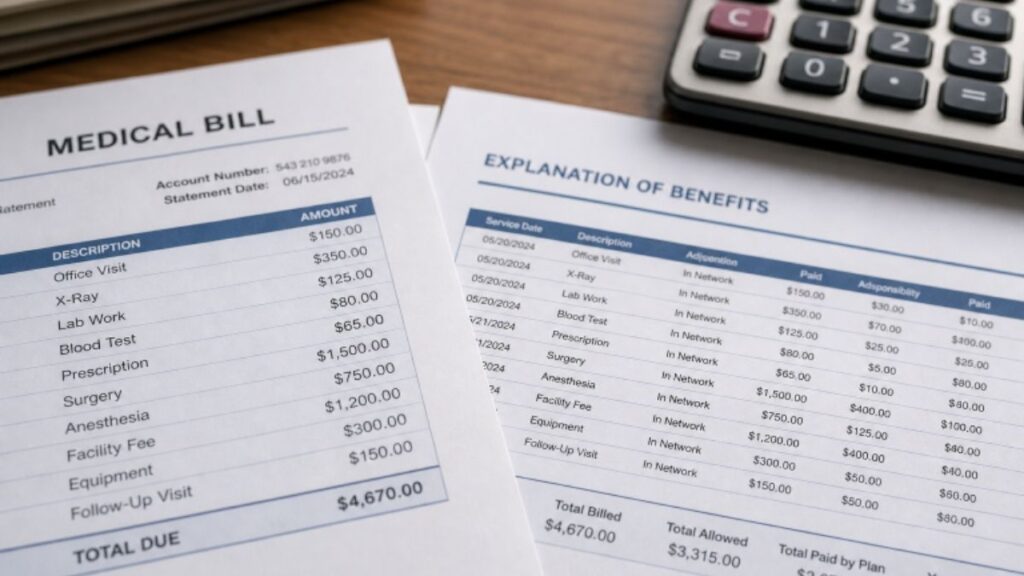
Do not assume PIP covers every bill. A $10,000 PIP limit can be exhausted quickly after an emergency-room visit, imaging, specialist care, physical therapy, or surgery. It also does not necessarily pay the remaining 20 percent of covered medical charges. Review the explanation of benefits from the insurer, compare it with the provider’s statement, and ask the provider’s billing department whether the bill has been submitted correctly.
Other Ways Medical Care May Be Paid
When PIP is unavailable, limited, or exhausted, several other payment sources may be relevant. The correct order can vary by policy and situation, so it is important to give every insurer accurate information about the incident.
- Health insurance: Private health coverage may pay for covered treatment, subject to deductibles, copays, networks, and coordination-of-benefits rules.
- Medical payments coverage: MedPay, if included in an auto policy, may help with medical costs that PIP does not fully cover.
- Workers’ compensation: For an injury that occurred in the course of employment, workers’ compensation may be responsible for authorized medical treatment and certain wage benefits.
- Medicare or Medicaid: Government programs may make payments under their own rules, but reimbursement obligations can arise after a recovery.
- Self-pay arrangements: A provider may offer a payment plan, reduced self-pay rate, or temporary account hold while a claim is reviewed.
Use insurance whenever it is reasonably available instead of leaving bills unanswered. A provider should not be told that an injury claim guarantees payment. Ask whether the office needs auto-insurance information, health-insurance information, a claim number, or written confirmation of pending coverage.
Medical Liens and Letters of Protection
Some providers may agree to treat an injured person with payment deferred until the claim concludes. This arrangement may be documented through a medical lien, an assignment, or a letter of protection. While the terms differ, the basic idea is that the provider expects to be paid from any recovery before the injured person receives the remaining settlement funds.
This can preserve access to care when insurance is unavailable, but it is not free treatment. Read the agreement carefully. It may state the provider’s charges, explain whether interest or collection costs apply, and require payment even if the case settles for less than expected or does not result in a recovery. Ask for itemized statements throughout treatment rather than waiting until the end of the case.
What May Need to Be Repaid From a Settlement
A settlement check is not always the amount an injured person takes home. Before funds are distributed, valid bills, liens, and reimbursement claims may need attention. Health insurers may assert subrogation or reimbursement rights under a policy or plan. Medicare may make conditional payments when another payer does not pay promptly, and its recovery process can require repayment after a settlement for accident-related care it paid.
That is why settlement planning should include more than the amount offered. The total medical charges, insurance payments, outstanding balances, attorney fees and costs, and potential reimbursement claims should all be identified before money is distributed. A person should not spend settlement proceeds that may be owed to a provider or benefit program.
How to Stay Organized While the Claim Is Pending
Keep a dedicated file for every accident-related charge. Save bills, explanations of benefits, receipts, pharmacy records, insurance letters, payment-plan agreements, and proof of any payment made. Record the date of service, provider, billed amount, insurance payment, remaining balance, and whether the account is in collections or subject to a lien.
Most importantly, continue medically appropriate treatment and communicate if a bill is incorrect or unaffordable. Do not delay necessary care solely because a claim is pending, and do not sign unfamiliar billing or settlement documents without understanding their effect. A careful record of who paid what can reduce surprises and make it easier to determine what remains after a Florida injury settlement is reached.