People in Oklahoma City exploring hyperbaric oxygen therapy may encounter a wide range of claims, from wound support to faster recovery and improved wellness. The most useful starting point is a balanced one: this is a medical treatment with established roles for certain conditions, but it is not a universal answer for every health concern.
Whether someone is managing a difficult wound, recovering after radiation treatment, or researching options after an injury, the decision should begin with a clear diagnosis and a discussion with an appropriately qualified clinician. Oklahoma City residents should also consider how hyperbaric care fits into the rest of their treatment plan, including standard medical, surgical, rehabilitation, and follow-up care.
What Is Hyperbaric Oxygen Therapy?
A medical treatment, not a catch-all
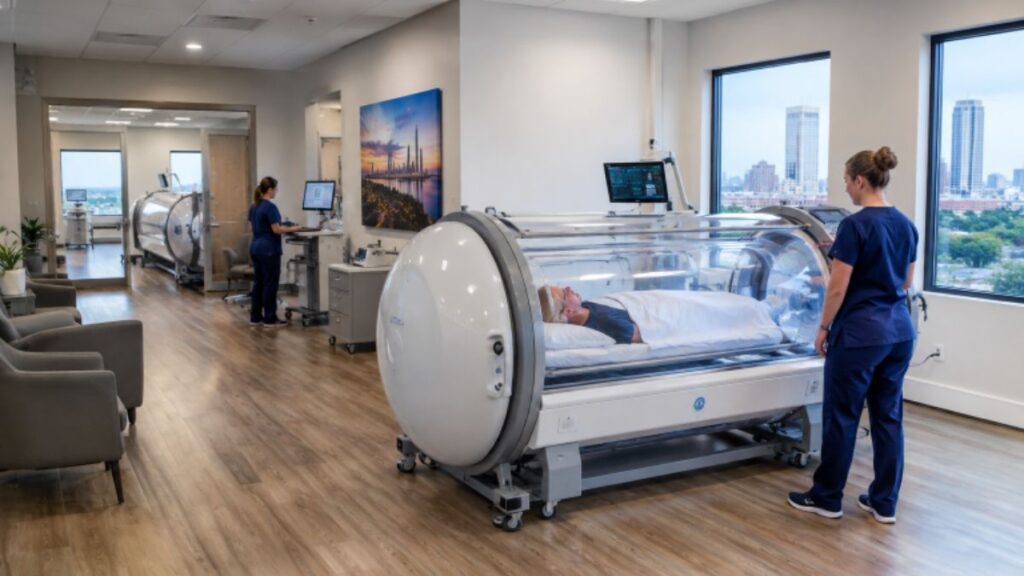
Hyperbaric oxygen therapy, often called HBOT, involves breathing oxygen in a chamber pressurized above normal atmospheric pressure. The higher pressure allows the lungs to take in more oxygen, increasing the amount available to the blood and body tissues. In a medical setting, treatment protocols are prescribed for a specific clinical reason and are carried out under supervision.
This is different from general wellness chamber sessions that may use lower pressures or different oxygen delivery methods. Those differences matter. A lower-pressure experience should not automatically be viewed as equivalent to a medical HBOT protocol or assumed to have the same evidence behind it.
How the Treatment Works
Oxygen is essential to normal tissue function and healing. Under pressure, more oxygen can dissolve into the liquid portion of blood and move into areas where circulation or oxygen delivery may be impaired. One simple comparison is improving a supply line during repairs: additional oxygen may help support tissue in selected circumstances, but it does not repair every underlying problem on its own.
For individuals who are also navigating life after cancer treatment, cancer recovery programs can help place recovery needs in a broader context that includes symptom management, nutrition, movement, emotional well-being, and communication with an oncology team.
Where Evidence Is Strongest
The evidence for HBOT is strongest when the diagnosis, timing, and treatment protocol match a recognized clinical indication described by the Undersea and Hyperbaric Medical Society, which includes conditions such as decompression sickness, carbon monoxide poisoning, air or gas embolism, selected problem wounds, delayed radiation injury, severe infections, and compromised grafts or flaps.
Even for these conditions, HBOT is commonly one part of a larger care plan. A nonhealing wound may still require blood-flow assessment, infection management, pressure relief, diabetes care, debridement, or surgery. Radiation-related tissue injury may require coordinated care with specialists. The value of treatment depends on the individual condition rather than the chamber alone.
Claims That Need More Research
Interest in HBOT has expanded into areas such as athletic recovery, chronic pain, fatigue, aging, neurological symptoms, and long COVID. Some of these topics have early research or plausible biological theories, but a promising result does not establish that a treatment is effective for everyone. Small studies, uncontrolled studies, testimonials, and short follow-up periods can all create an incomplete picture.
Before committing time and money, ask whether the proposed use is supported by clinical guidelines, whether the treatment has been studied in people with a similar diagnosis, and whether meaningful outcomes were measured. A helpful evidence checklist includes:
- Was the study conducted in people rather than only in a laboratory or animal model?
- Did it compare treatment with an appropriate control group?
- Was the study large enough to provide dependable results?
- Did researchers measure outcomes that matter to patients?
- Have other research teams reached similar conclusions?
Safety Risks and Screening
HBOT has real safety requirements. Pressure changes can cause ear or sinus discomfort, and some people experience temporary vision changes. Less common but more serious complications can include pressure-related injury, oxygen-related seizures, or lung problems. An oxygen-rich environment also creates a fire risk, which is why fire prevention and staff supervision are essential parts of safe chamber operation.
Screening matters because certain lung conditions, ear or sinus problems, medications, implanted devices, and other health concerns may require additional review. Patients should share a complete medical history, including recent illnesses, breathing symptoms, prior ear surgery, and all prescription or over-the-counter medicines.
What a Session May Involve
- A clinician reviews the health history, diagnosis, and treatment goal.
- The patient receives instructions about approved clothing, personal items, and chamber safety.
- The chamber pressure gradually changes, and the patient may need to equalize ear pressure by swallowing, yawning, or following staff directions.
- Staff members monitor the patient throughout the session and should be told about pain, breathing trouble, anxiety, or unusual symptoms immediately.
- Afterward, the care team may assess the patient before discharge or before the next scheduled treatment.
Experiences vary by chamber type and medical situation. Some people rest in an individual chamber, while others receive oxygen by mask or hood in a larger chamber. The number and frequency of sessions should be tied to the diagnosis and regularly reassessed rather than treated as a one-size-fits-all schedule.
Questions to Ask Before Treatment
- What condition is this intended to address?
- Is this use established, guideline-supported, or still being studied?
- What benefits are realistic, given my health history?
- What standard treatments should continue alongside HBOT?
- Who supervises treatment, and what chamber type will be used?
- How are cleaning, maintenance, fire prevention, and emergencies handled?
- How will progress be measured, and when will the plan be reviewed?
- What are the expected time and financial commitments?
A Simple Decision Guide
A careful decision begins with the diagnosis, not the claim. Check the evidence for that specific problem, review personal safety factors, compare alternatives, and establish a point for reassessing progress. In Oklahoma City, as anywhere else, the most responsible approach to hyperbaric oxygen therapy is one that treats it as a focused medical tool: potentially valuable in the right setting, but never a replacement for sound diagnosis, qualified supervision, and comprehensive care.